
Throwback Thursday: Living Low-Tech in Sunny Cuba
Starved for information in Havana? There’s an app for that...

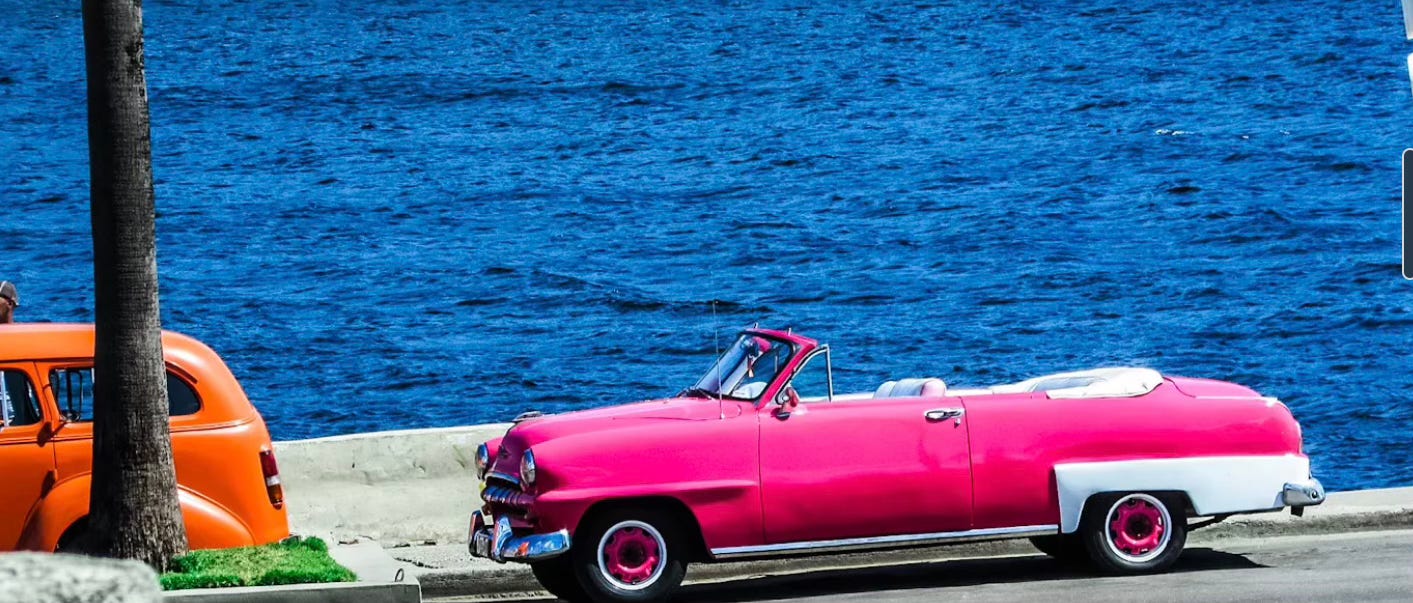
(Classic cars in Cuba, photo by Robert Basler)
Dear Readers: A slight change of pace. This one is a Thursday rerun, but not from 5 a.m. Stories. I wrote it for LinkedIn, in 2015, following a trip to Cuba. I came across it recently, and thought you might enjoy it, since Cuba will probably be our 54th state, after Canada, Iran and Greenland.
HAVANA, Cuba - We are seated in a dimly lit parlor in a home used for rituals and initiations of the Santeria religion. A practitioner, smoking a large cigar, has just explained his religion’s practice of animal sacrifice.
He pauses to allow that information to sink in. The cigar smoke hovers around us in the hot, airless space. Suddenly, an elderly man enters from another room, shuffling across our line of sight carrying a very old-fashioned countertop meat grinder.
It is difficult to avoid making an unfortunate mental connection between the concept of animal sacrifice, and the meat grinder.
The unexpected appearance of 60-year-old technology is a routine part of any visit to Cuba. All of us have seen the photos of well-preserved automobiles that were showroom shiny back in the 1950s, and this frozen-in-time feeling is not just confined to transportation. It is everywhere you look.
Some visitors happily adapt to the old technology; indeed, many come here because of it. And some, like a very clever Canadian guy I met in Havana, find ingenious ways to work around it. But more on that later.
My own introduction to the technology gap came late one night as we arrived exhausted at our casa particular – a room rented to travelers by Cuban citizens, to help make up for a shortage of hotel space.
Yes, there was a room available on the fifth floor. Would we like to see it? Sure. Oh, there is a small problem with the elevator, but it is being repaired right now.
Six of us pressed ourselves into the ancient lift, the cage door clanging shut behind us. A large ceiling panel was missing, and a man’s legs dangled into the elevator. The other half of the man was out of sight, doing something – I didn’t want to know what – to get the elevator moving, and to stop it on the right floor.
We immediately began referring to the guy as “Elevator Half-Man,” and we mentioned him often over the next week, finally shortening his name to Otis for obvious reasons.
We never got in that elevator again.
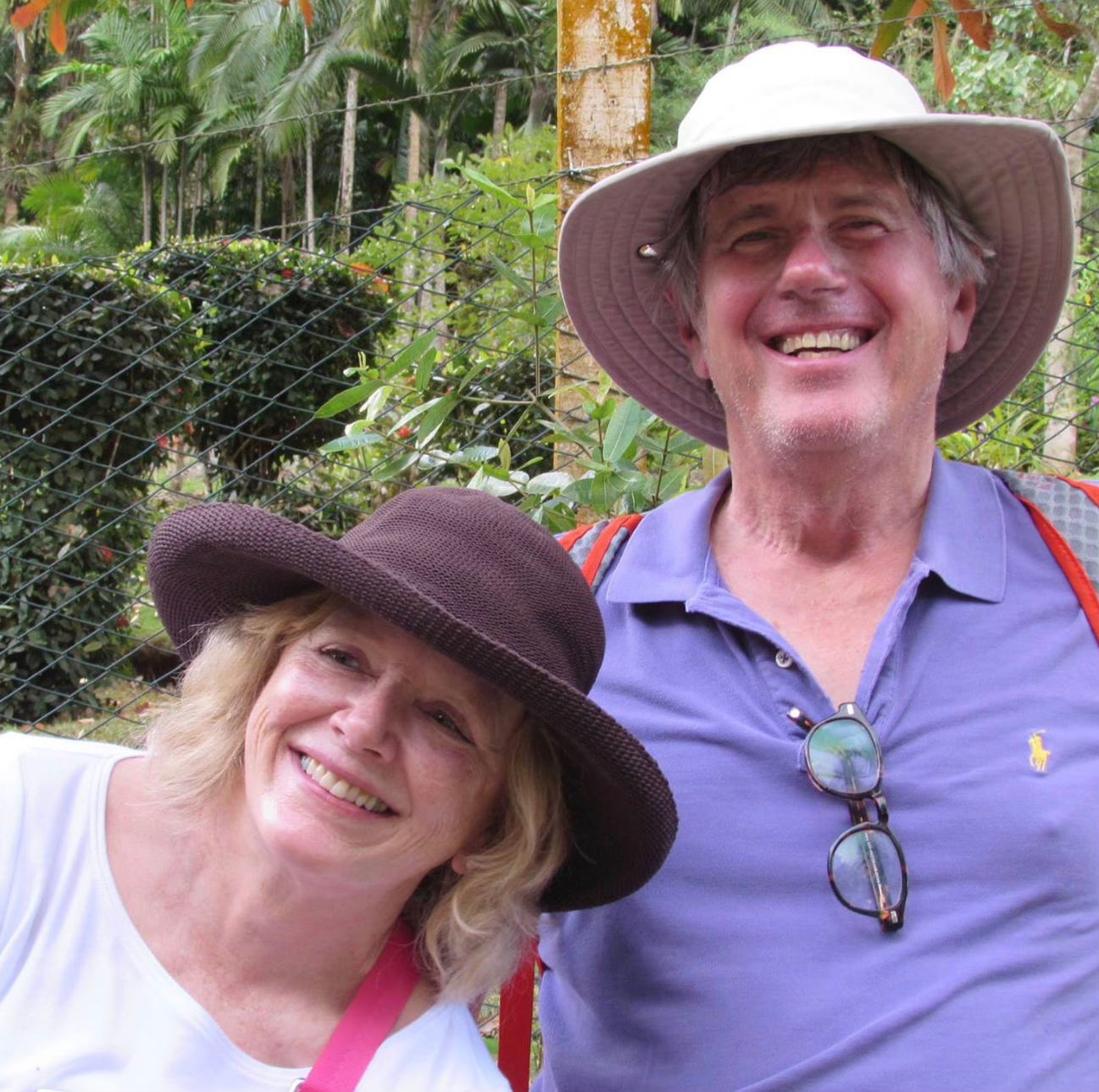
(Happy couple in Havana.)
Compromising with technology in Cuba takes on many forms. It is a bar in a high-end hotel saying sorry, no daiquiris today, our only blender is broken. It is me holding the loose passenger door closed in a ’52 Chevy, trying not to become part of the pavement when we turn a corner.
You wouldn’t expect much in the way of modern communications in a place like that, and you would be right. I go to SETTINGS on my iPad, click on CHOOSE A NETWORK, and nothing happens. Nary a network to be found, in a densely populated section of the city. I punch the pretty desktop icons, all of them useless. I could hit them with a ball peen hammer and get the same result.
Many Cubans have cell phones and can make calls and send emails, but most don’t have access to the Web. I talked to one man who is allowed online because he is a doctor, but even he only gets dial-up. Remember dial-up? I watched him load a page, a painfully slow process. I like to imagine he started downloading a porn photo in 1998 and it’s almost ready for him now.
Over the course of a few days I became aware that I didn’t have a clue what the Dow was doing, what the weather was like back home, or if Barack Obama was still the president. I was blissfully uninformed.
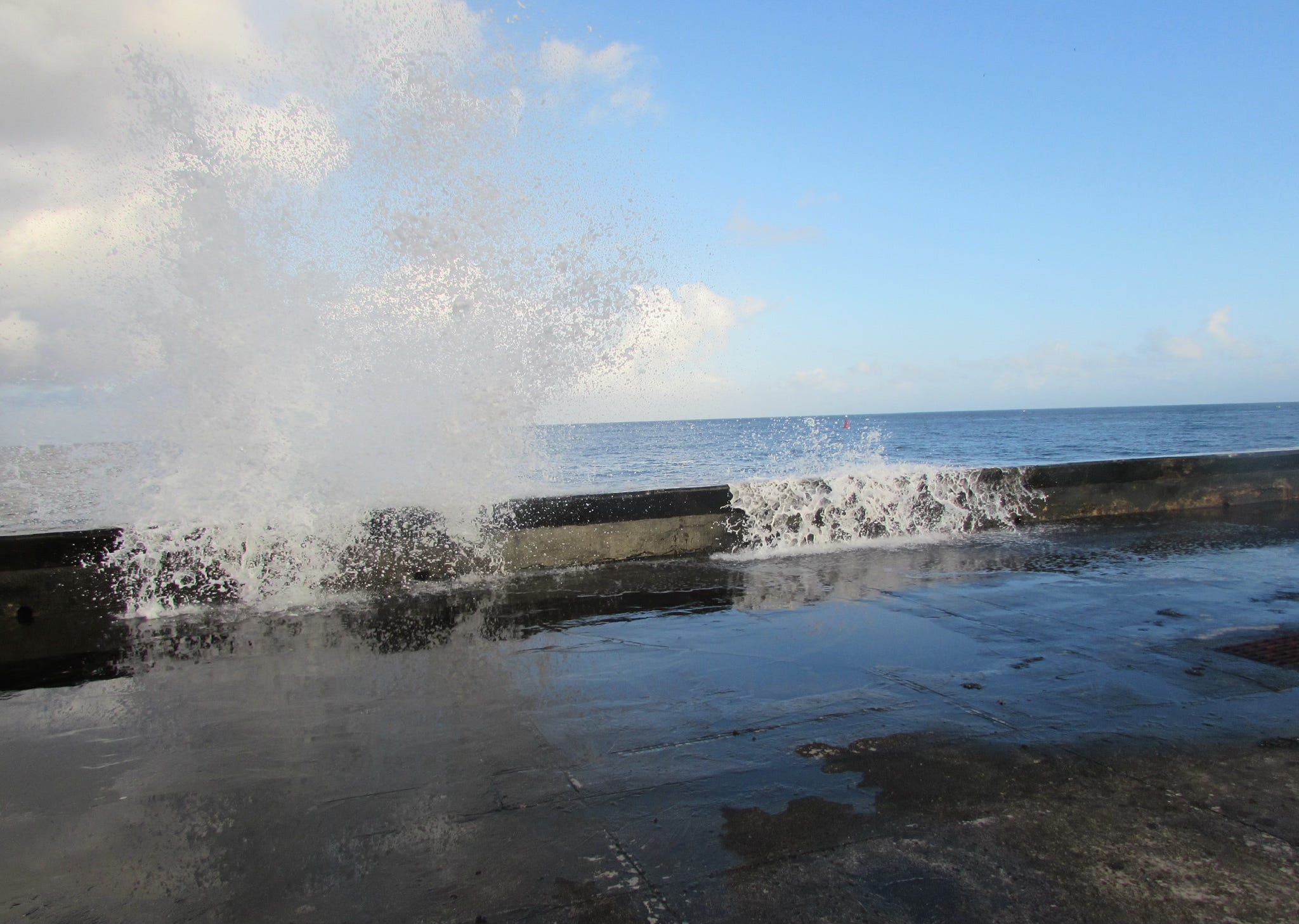
(A morning sea walk along the Malecón, in Havana, photo by Robert Basler.)
Not that foreign tourists are completely without connectivity. There are options.
You can go to the fabled Hotel Nacional de Cuba, a place teeming with history from the last century. Everyone who was anyone can be seen in old black and white photos that are all over the public areas. The Nacional was the venue of a 1946 mob summit run by Lucky Luciano and Meyer Lansky.
These days, just a few steps up from the grand lobby you can rent a private cubicle with a desktop computer, for just a few convertible Cuban pesos.
Of course, the keyboards are Spanish, and old. Many of the keys are worn clean., so good luck finding your home keys. Oh, and don’t bother looking for an @ symbol – you make that yourself by using ALT 2.
You would rather have wifi? Sure, several other fine hotels will sell you minutes. You may sign on near the communications desk, or for a more enjoyable experience you can go to the bar and read in on your tablet while you slurp mojitos. The civilized way to surf, Cuban-style.
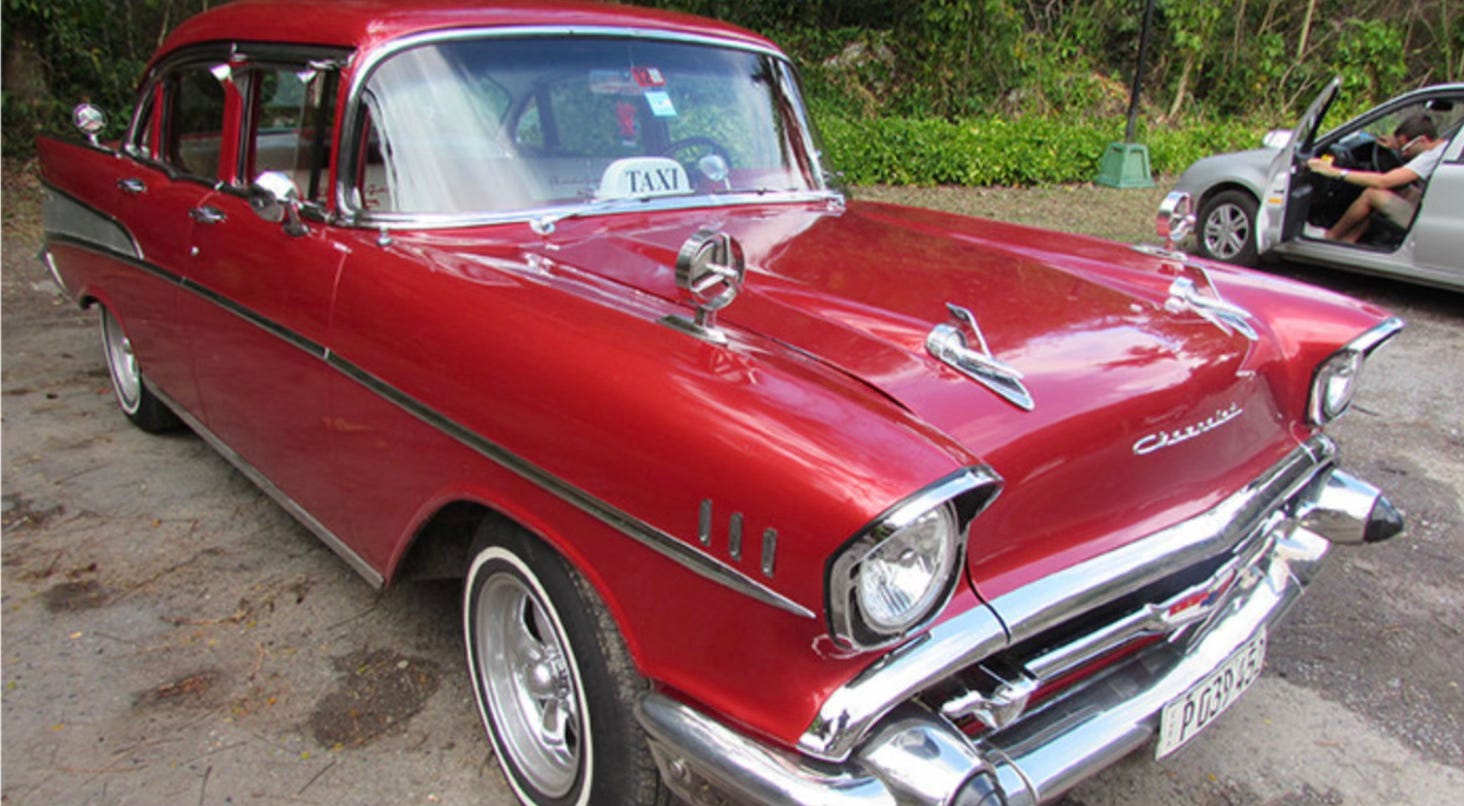
((Classic car in Cuba, photo by Robert Basler.)
But wait a minute. I was going to tell you about this tourist from Toronto, a dude I met one morning at the communal breakfast table.
Before he came to Cuba, he had arranged for his cell phone and email to work seamlessly here, but that lasted for a day and then stopped. He wanted to find out about Havana’s baseball schedule and other local events, but no one seemed to know.
So he went - wait for it - to a neighborhood barbershop.
“I figured the guys in a barbershop would know stuff like that,” he explained to me. My wife says now I look like I have a Cuban haircut, but it was worth it!”
So there you go. Starved for information in Havana? There’s an app for that...
Why did you go to Cuba? You know, there are plenty of lovely tropical islands in the Caribbean. Probably the place was much better before that unfortunate business with Soviet missiles.