
A Photographic Memory
That is where I’m going with this story...

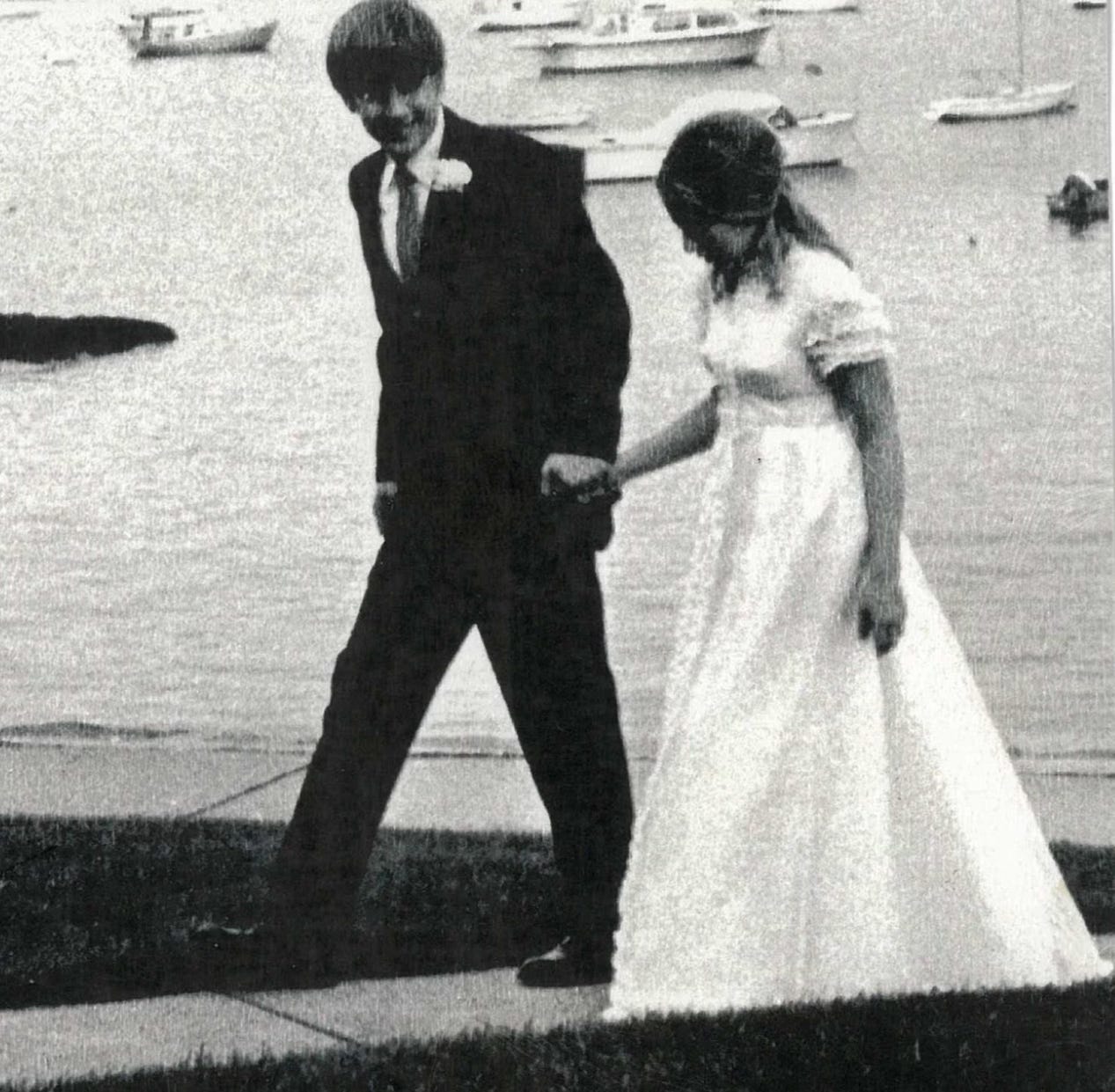
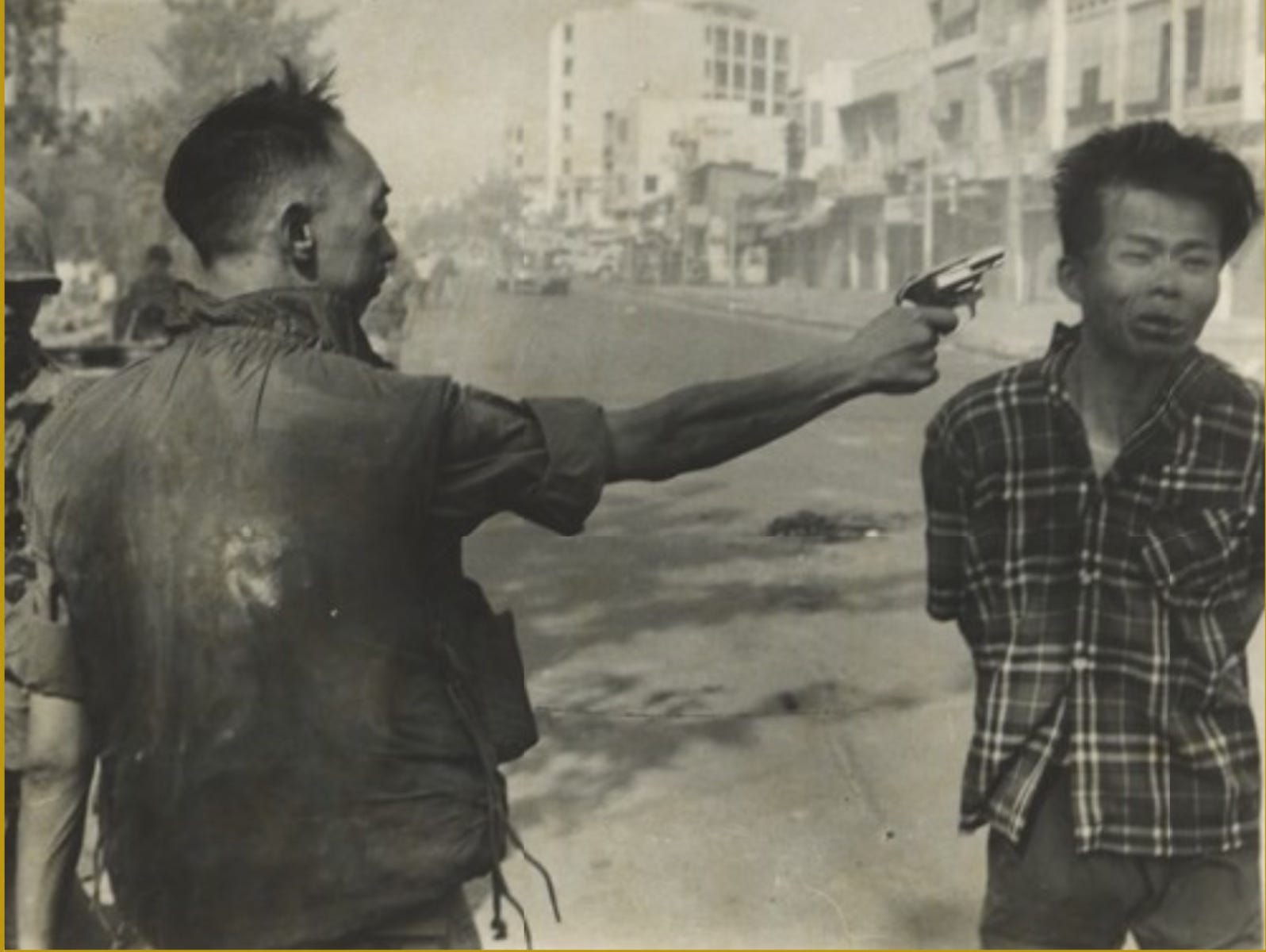
(Photos by Eddie Adams)
Dear Readers: I have dismantled the pay wall just for today’s story. It is free to everyone. Please share it with your friends, or even with folks you barely know. Leave comments, and post it anyplace you can.
Let’s begin today’s 5 a.m. Story with a guessing game.
You see these two black-and-white photos? What do you think they have in common? I mean, apart from being black-and-white photos, which is fairly obvious.
Time’s up.
Both were taken by an Associated Press photographer named Eddie Adams. He won a Pulitzer Prize for the photo of a 1968 summary execution on the Streets of Saigon. It shocked the nation and is one of the most iconic images from the Vietnam War.
There was no Pulitzer Prize for the other picture, but it remains my favorite photo from my 1971 wedding.
Eddie, who was a wedding guest, quietly tapped Barbara on the shoulder at our reception and motioned us to follow him outside. He walked us across the lawn to Long Island Sound, produced a hidden Leica 35 mm camera from the pocket of his suit jacket, and took this picture on the day my world became perfect.
Surprisingly, Eddie would come to believe that the fame surrounding the graphic Vietnam photo had hurt him more than it helped. He said it pigeon-holed him as a war photographer, and “when you’re labeled like that nobody’s going to call unless they got a war.”
But that’s not where I’m going with this story.
Photography and I go way, way back, to a time when I had a banged-up, second-hand Nikon F camera, a darkroom in my mom’s basement, and I felt like I could go either direction in journalism — as a writer or a shooter. It just happened that my first break came as a reporter, so that’s how it went down for the next 40 years.
I have no regrets.
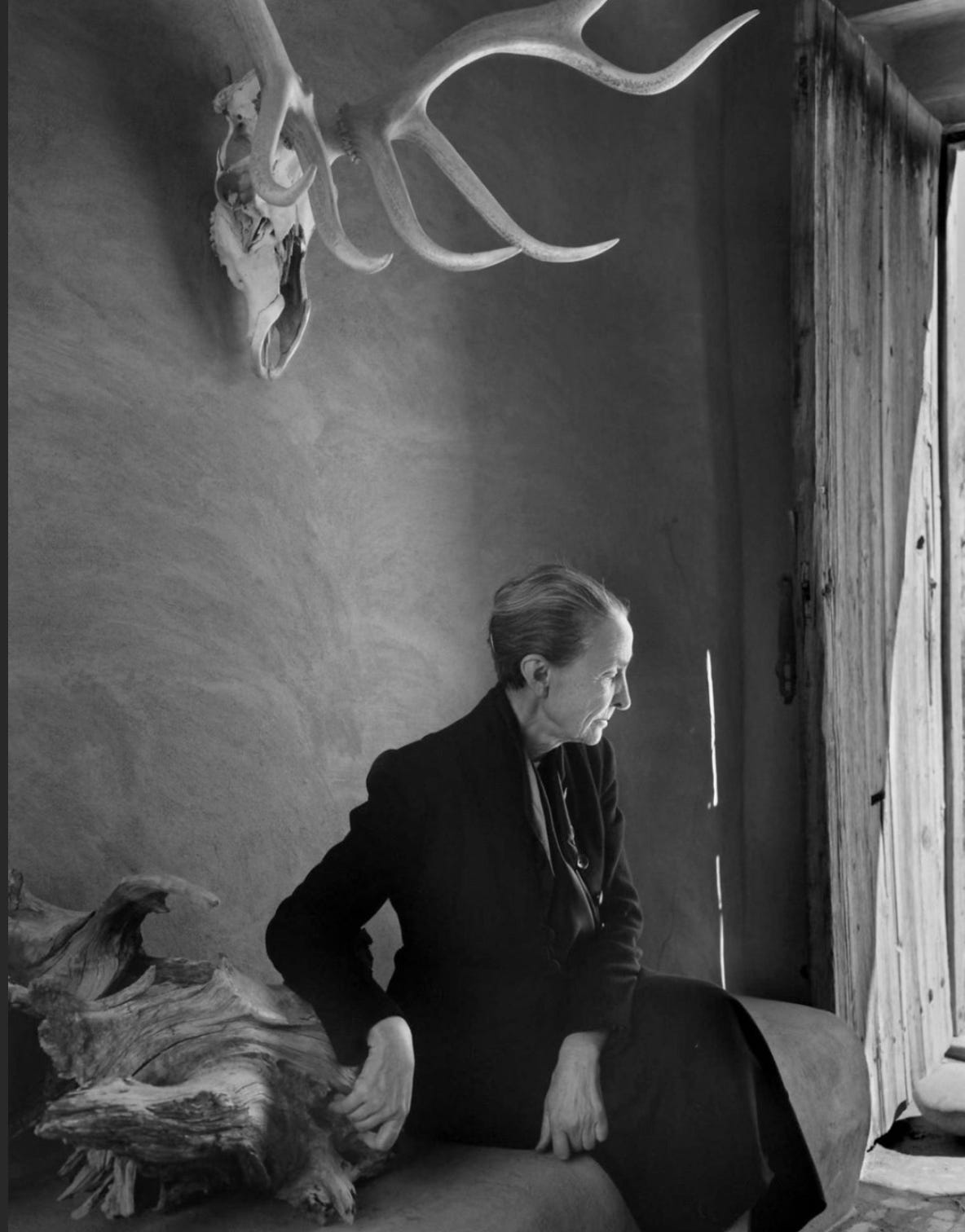
(Photo by Yousuf Karsh)
Two years ago, I wrote a 5 a.m. Story about my enormous respect for the photographer Yousuf Karsh. I wrote about his portrait of the artist Georgia O’Keeffe, and the unexpected moment when I recognized that I was standing in the exact spot where the Karsh photo had been taken, 60 years earlier. The only thing missing from the scene was Georgia O’Keeffe, herself.
That experience was a very moving one for me, but I’ve already written about it, so that’s not where I’m going with this story.
In 2012, my wife and I retired to Santa Fe, New Mexico, buying an adobe house way up in the mountains, 7,400 feet above sea level. The first occupant of the somewhat quirky home had been a photographer named Paulette Tavormina.
She had collected coins on her many travels and embedded some of them on the surface when the house’s rusty red concrete floor was poured. She also collected antique keys, and some of those were visible on the face the living room fireplace.
Paulette specialized in photographing still lifes of food and flowers, in the style of the Old Masters paintings, and she was good enough at it that she got out of Santa Fe and moved east, selling her works though very prestigious photo galleries.

We erased some of the vestiges of Paulette from the place, turning her huge darkroom into our family room and converting the darkroom sink area into a bar, but we left her keys and coins right where they were. They were someone’s memories, after all.
I briefly entertained the idea of buying one of Paulette’s photos to hang in the kitchen. I love it when things come full circle like that. But then I learned what her work sells for, and I dropped that idea.
As a footnote, the family that bought the place from us did buy one of her paintings. I had the right idea but the wrong bank account, but that isn’t where I’m going with this story.
Earlier this month, we took an anniversary cruise to the Greek Isles aboard a National Geographic ship. Much of the emphasis on these cruises is on serious photography, and whipping out your smart phone to take a picture is like bringing a knife to a gunfight.
The NatGeo staff always includes several photo professionals to help you with specialized advice, and if what you’re using is a cell phone, they are usually polite enough not to sneer and hurl the thing overboard.
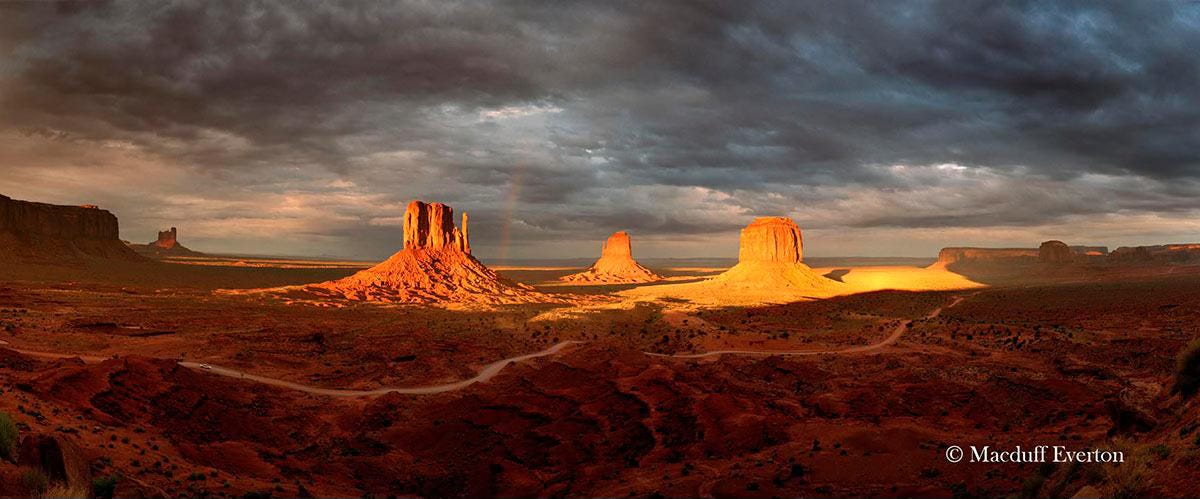
(Photo by Macduff Everton)
One night at dinner we had a great conversation with one of the traveling NatGeo shooters, a guy named Macduff — same name as the guy who kills Macbeth in a well-known play.
Macduff was his first name, which I thought was way beyond cool. It turned out that Macduff and his wife, an artist named Mary Heebner, who was along on the Greek trip, were delightful, and we laughed with them, nonstop.
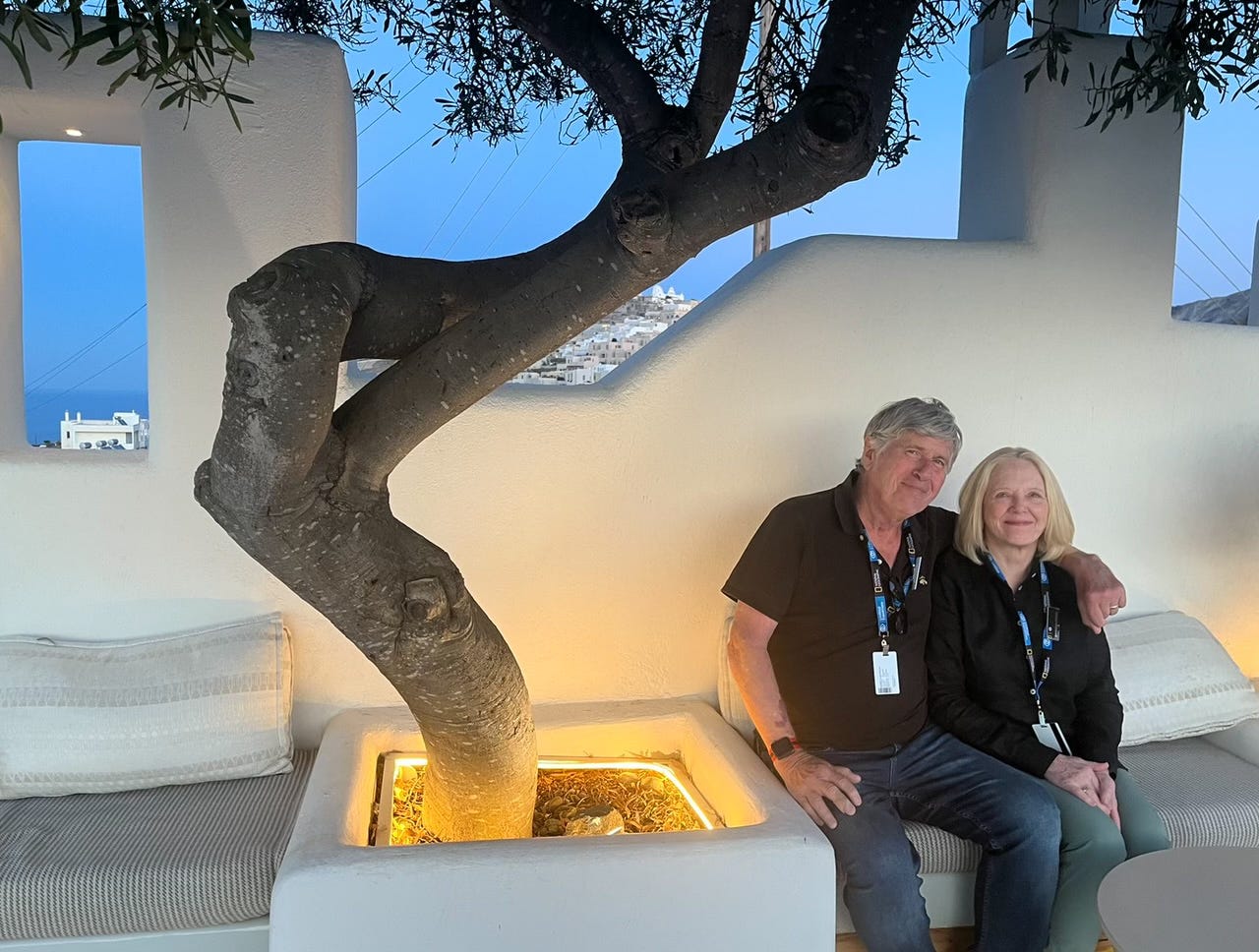
At a festive farewell dinner, where there was wine, Greek dancing and plate-smashing, Macduff very considerately offered to take a photo of us with a romantic background, much like Eddie Adams had done all those many years ago.
Macduff took a couple of shots, decided we should shift places, and then he produced this lovely memory.
(Photo by Macduff Everton)
Later, back in our cabin, Barbara began idly Googling.
Hey, Bob?
What?
Macduff is the real deal!
What do you mean?
His name is Macduff Everton. He’s had a whole bunch of high-end photo collections published and won all kinds of awards.
You’re kidding!
The New York Times photo critic compared him with Ansel Adams! The critic said Macduff “captures strange and eloquent moments in which time, and the world, seem to stand still.”
That’s the same guy who just took our portrait?
Yep. The same guy.
For me, the symmetry between this picture and Eddie Adams’ wedding day photo from so long, long ago was sweet and inescapable.
That is where I’m going with this story.
Value of a happy anniversary portrait, overlooking the glorious blue Aegean Sea: priceless.
And I thought you were just being polite to the photo desk in DC…
This story is priceless. as are the photographs. Because you and Barbara are a very special story.
Thanks for sharing the joy, Bob.